Neuroscience

Neuroscience

Neuroscience

The Thought Came First. Your Body Had No Choice.

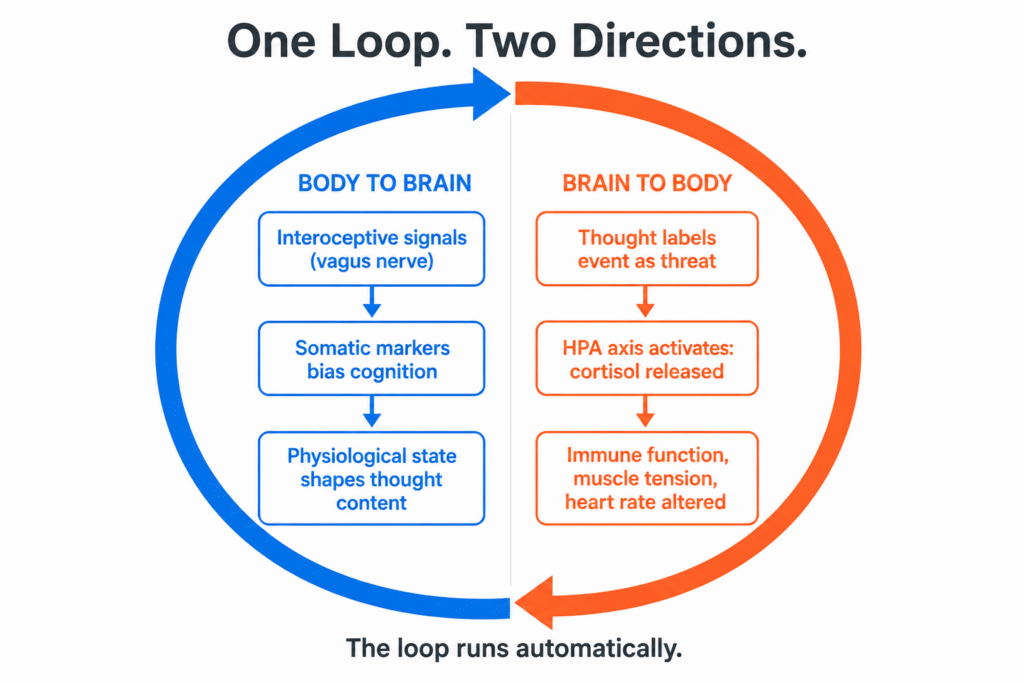
“There is nothing either good or bad, but thinking makes it so.” , William Shakespeare, Hamlet, Act 2 Scene 2, c. 1600 Shakespeare was writing about perception and moral relativism. He was also, without the vocabulary for it, describing a physiological mechanism that science would take 400 years to document precisely. The thought that labels

Neuroscience

You Have 6,200 Thoughts Today. You Chose None of Them.

“I think, therefore I am.” , René Descartes, Discourse on the Method, 1637 Descartes was certain of one thing: the thought itself proved his existence. What he could not account for, and what no philosopher could until the 20th century, was what was generating the thought in the first place. He assumed he was the

Calm & Resilience, Neuroscience

The Neuroscience of Breath: How Respiration Controls Your Prefrontal Cortex

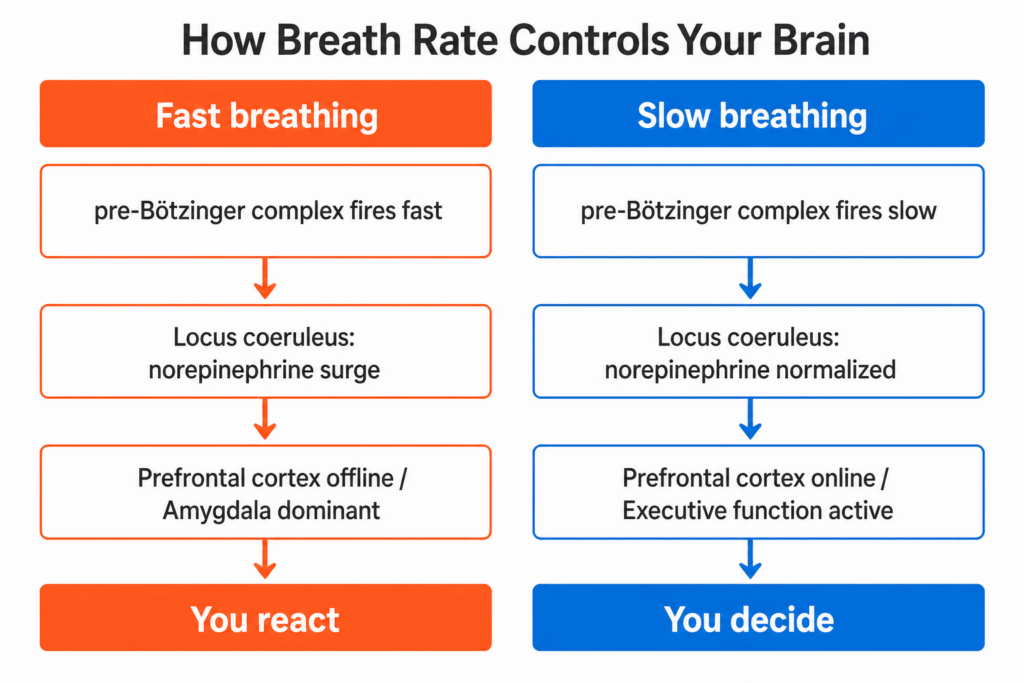
Breathing is not a calming technique. It’s a brain control mechanism. The prefrontal cortex, the region responsible for decision-making, impulse control, and executive function, is directly modulated by respiratory rhythm. When you breathe fast, prefrontal activity decreases. When you breathe slowly, it increases. You are literally thinking better or worse based on how you breathe.

Shopping Cart
Scroll to Top